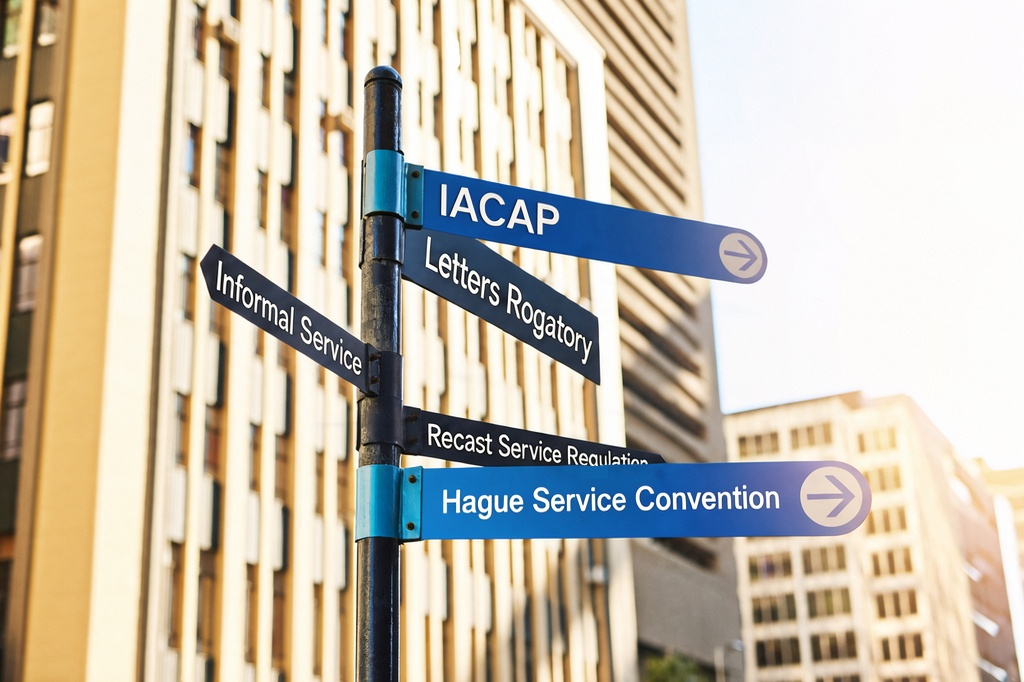

Civil Litigation and International Process Service: Why Proper Service Matters
Civil litigation often involves parties, witnesses, businesses, and other individuals located in different jurisdictions. While filing a lawsuit begins the legal process, properly notifying the parties involved is an essential part of moving that litigation forward.
This is where service of process becomes critical.
Service of process is the formal delivery of legal documents to a person or entity in accordance with applicable procedural requirements. In a domestic case, service may be relatively straightforward. When a defendant or other party is located in another country, however, the process can become considerably more complex.
International service of process requires careful attention to the laws of the jurisdiction where the case was filed, the laws of the country where service will take place, and any applicable international treaties or conventions.
For attorneys and legal professionals involved in cross-border civil litigation, understanding these requirements before attempting service can help prevent unnecessary delays, additional costs, and challenges to the validity of service.
What Is Process Service in Civil Litigation?
In a civil lawsuit, legal documents must generally be formally served on the parties who are required to receive them. Depending on the nature of the proceeding, these documents may include a summons and complaint, petition, subpoena, notice, motion, or other judicial or extrajudicial documents.
The purpose of service is to provide legally recognized notice to the appropriate party and to establish that the required documents were delivered through an authorized method.
Simply sending a document to someone does not necessarily constitute valid service.
The applicable rules may specify who may serve the documents, how service must be performed, where service may occur, what documents must be provided, and what evidence must be returned after service is completed.
These requirements are particularly important in civil litigation because improper service can create procedural complications later in the case.
Why Proper Service of Process Matters
Service of process is sometimes viewed as a routine administrative step. In reality, it can have significant consequences for the progress of a civil case.
If service is challenged or determined to be defective, the litigation may be delayed while the issue is resolved. In some circumstances, a party may need to be served again, creating additional expense and potentially affecting litigation schedules.
Depending on the jurisdiction and circumstances, issues surrounding service may also involve questions of personal jurisdiction, procedural due process, or the enforceability of subsequent proceedings or judgments.
For this reason, attorneys should not treat service as an afterthought.
A properly planned service strategy can help ensure that the required documents reach the correct party through a method recognized by the applicable rules and that appropriate proof of service is obtained.
When Civil Litigation Crosses International Borders
International civil litigation introduces another layer of complexity.
A defendant may be located in a foreign country while the lawsuit is pending in the United States, Canada, the United Kingdom, Australia, or another jurisdiction. The attorney handling the case cannot necessarily assume that the service rules applicable in the forum jurisdiction can simply be used in the foreign country.
The country where service physically takes place may have its own laws governing the delivery of judicial and extrajudicial documents.
There may also be international agreements that affect how service must be performed.
As a result, serving a defendant overseas requires more than identifying an address and arranging for someone to deliver the documents.
Before service is attempted, legal professionals may need to determine:
- Whether an international treaty or convention applies
- Whether the destination country has specific requirements or objections
- Whether a Central Authority must be involved
- Whether documents must be translated
- Who is authorized to perform service
- Which methods of service are permitted
- What documentation must accompany the request
- What form of proof or certificate of service is required
The correct procedure can vary significantly from one country to another.
The Hague Service Convention
One of the most important international instruments concerning service of process is the Hague Convention on the Service Abroad of Judicial and Extrajudicial Documents in Civil or Commercial Matters, commonly known as the Hague Service Convention.
The Convention provides a framework for transmitting judicial and extrajudicial documents between participating countries for service.
For cases falling within its scope, the Convention can provide an established mechanism for requesting service in another participating country. One important feature is the use of designated Central Authorities in participating countries.
However, the existence of the Hague Service Convention does not mean that international service is identical in every participating country.
Countries may have different declarations, objections, procedures, language requirements, and rules concerning particular methods of service. The applicable procedure therefore needs to be considered on a country-by-country basis.
Attorneys should also determine whether the Convention applies to the particular matter before selecting a method of international service.
International Service of Process Is Country-Specific
One of the most important considerations in international process service is that there is no single procedure that works everywhere.
Requirements can differ substantially between countries.
In some jurisdictions, service may be performed by a local process server or other authorized professional. In others, service may involve courts, judicial officers, bailiffs, government authorities, or a designated Central Authority.
Translation requirements can also vary.
A document that is acceptable in the jurisdiction where the lawsuit was filed may require translation into the language of the destination country before service can be completed.
Even seemingly minor details—such as the format of the documents, supporting paperwork, authorization, or the form of the return of service—can become important.
This is why international service should be planned around the specific destination country, rather than relying on a generalized approach to overseas service.
Common Challenges in International Process Service
Cross-border service can present challenges that do not arise in a typical domestic case.
• Assuming Domestic Service Rules Apply Overseas
One common mistake is assuming that the procedure used to serve a defendant domestically can simply be repeated in another country.
The laws governing service where the documents are physically delivered may impose additional requirements.
• Failing to Check Treaty Requirements
Where an international convention applies, failing to account for its requirements can result in an attempted service that does not achieve the intended legal objective.
The applicable treaty provisions, country declarations, and permitted methods should be reviewed before service is initiated.
• Overlooking Translation Requirements
Some countries require documents to be translated before they can be served through particular procedures.
Translation requirements should therefore be identified early, rather than after documents have already been sent overseas.
• Using an Unrecognized Method of Service
A method that is routinely accepted in one country may not be recognized in another.
For example, a delivery method that appears practical from the perspective of the attorney may not satisfy the legal requirements applicable in the destination jurisdiction.
• Incomplete Proof of Service
Completing the physical delivery is only part of the process.
The attorney may also need appropriate documentation demonstrating when, where, how, and upon whom service was completed.
The required form of proof can vary depending on the procedure used and the jurisdictions involved.
The Role of an International Process Server
An experienced international process-service provider can help legal professionals coordinate the practical aspects of serving documents abroad.
This may include identifying an appropriate local professional, reviewing destination-country requirements, coordinating document delivery, addressing language or translation considerations, and obtaining documentation confirming the outcome of the service attempt.
The role is not simply to locate a person and hand over an envelope.
International process service involves coordination, procedural awareness, communication, and careful documentation.
For attorneys working under litigation deadlines, having a reliable local resource can also make it easier to monitor the status of an international service assignment and respond quickly when additional information or another attempt is required.
Planning International Service Early
International service should ideally be considered as early as possible in a civil litigation matter.
Waiting until a filing deadline is approaching can create unnecessary pressure, particularly when the destination country has formal procedures that take time to complete.
Before sending documents overseas, legal professionals should consider:
- Where is the party located?
- Which country’s laws govern service at the destination?
- Does an international treaty or convention apply?
- What method of service is permitted?
- Are translations required?
- What documents and supporting information are needed?
- Who is authorized to perform the service?
- What proof of service will be returned?
- How long is the process likely to take?
- What should happen if the first attempt is unsuccessful?
Addressing these questions before service begins can help reduce avoidable delays and procedural problems.
International Process Service Supports the Larger Litigation Strategy
Service of process does not exist separately from the litigation itself.
It is one part of the broader process of moving a civil case forward.
When a defendant is located overseas, successful service can require coordination between attorneys, courts, process-service professionals, translators, government authorities, and local professionals in the destination country.
The objective is not simply to deliver paperwork. The objective is to complete service through an appropriate and legally recognized procedure and to provide the attorney with documentation of the result.
That distinction is particularly important in international litigation.
Why Experience Matters in Cross-Border Service
International service assignments can involve unfamiliar jurisdictions, language differences, local procedural requirements, and international conventions.
An experienced provider can help bridge the gap between the attorney handling the case and the professionals carrying out service in another country.
At Stellar Konsulting, we coordinate international process service for attorneys, law firms, corporations, government agencies, and other legal professionals requiring service of legal documents outside their home jurisdiction.
Our international network supports service assignments across numerous countries and jurisdictions, with attention to applicable procedures, local requirements, and documentation.
Whether service involves a straightforward local delivery or a more formal international procedure, each assignment should begin with an understanding of the requirements governing the specific destination.
International Process Service With Stellar Konsulting
When civil litigation extends across borders, proper service of process can be one of the most important procedural steps in the case.
The earlier international service requirements are identified, the better positioned legal professionals are to plan for document preparation, translations, local coordination, service attempts, and proof of service.
Need to serve legal documents internationally?
Stellar Konsulting can help coordinate international process service and connect your case with experienced professionals in the destination jurisdiction.
Submit your international process-service request today and provide the details of your case, the destination country, and the party to be served.
International service requirements vary by jurisdiction and case. Attorneys and legal professionals should determine the procedures applicable to their particular matter before initiating service.