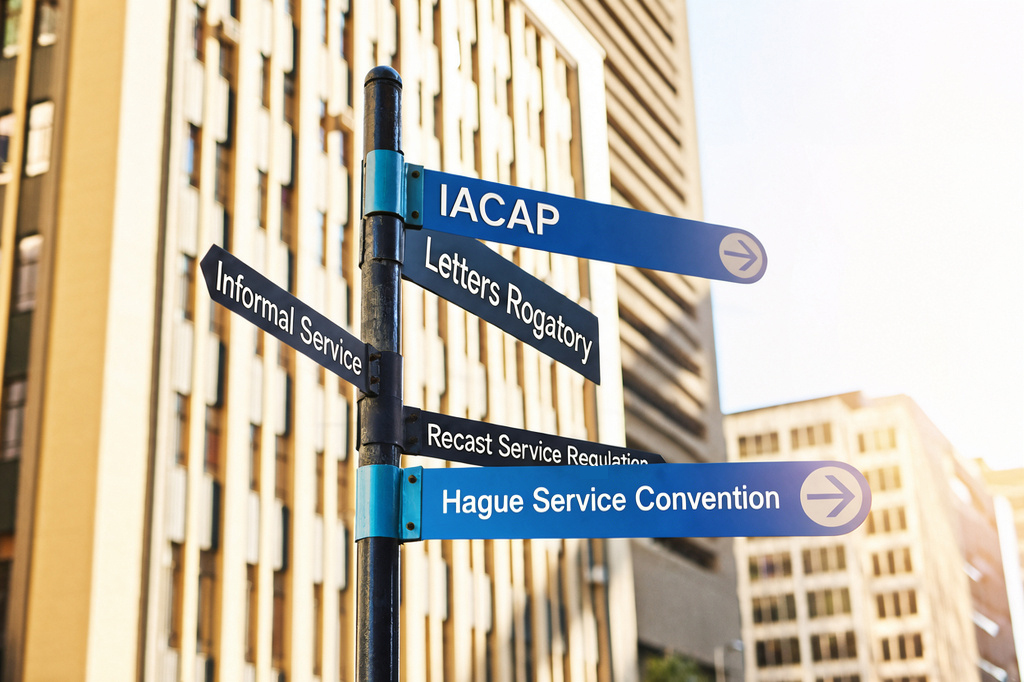
Serving legal documents across international borders is rarely simple—but when it comes to India, the process can be especially complex. While India is a signatory to the Hague Service Convention, legal professionals quickly discover that service in India involves unique limitations, procedural hurdles, and strategic decisions.
Whether you are a law firm, corporate legal department, or private litigant, understanding how to properly serve legal documents in India is critical. Choosing the wrong method can result in delays, rejected service, or even invalid proceedings.
This guide explains how service of process works in India, compares Hague Service Convention procedures with Letters Rogatory, and outlines best practices to ensure successful service.
Is India a Member of the Hague Service Convention?
Yes—India is a contracting state to the Hague Service Convention. However, this often leads to confusion.
While membership suggests streamlined international service, India has made specific objections that significantly restrict how the Convention operates within its jurisdiction.
Key Limitations
- India objects to Article 10 of the Convention
- Service by postal channels is not permitted
- Direct service through private process servers is not allowed
- Informal service methods are generally invalid for judicial documents
As a result, the only recognized Hague method in India is service through the designated Central Authority.
How Hague Service Works in India
Under the Hague framework, service must be routed through India’s Central Authority, typically a government-designated legal body responsible for processing incoming requests.
Step-by-Step Overview:
- Submission of service request with required forms
- Transmission to India’s Central Authority
- Review and processing by local authorities
- Service of documents within India
- Issuance of proof (certificate of service)
Key Considerations:
1. Processing Time
Service through the Central Authority in India can take several months—and in some cases, longer.
2. Strict Compliance Requirements
Incorrect documentation, formatting issues, or missing details may result in delays or rejection.
3. Translation Requirements
Depending on the jurisdiction and court requirements, documents may need to be translated.
4. Limited Flexibility
Unlike other countries, India does not allow alternative service methods under the Convention.
Why Letters Rogatory Are Commonly Used in India
Due to the limitations of Hague procedures, many legal professionals opt for Letters Rogatory when serving documents in India.
Letters Rogatory are formal requests issued by a court in one country to a court in another, asking for judicial assistance in serving documents.
Why This Method Is Preferred:
1. Court-to-Court Authority
Letters Rogatory carry judicial weight, making them more acceptable in Indian courts.
2. Higher Reliability
Because the request is processed through official court systems, there is less risk of rejection.
3. Better for Complex Cases
High-value litigation, corporate disputes, and sensitive matters often benefit from this method.
The Trade-Off:
- Letters Rogatory are more formal
- They are typically slower than Hague service
- They require court involvement from the outset
Despite these drawbacks, they are often considered the most dependable option for serving legal documents in India.
| Factor | Hague Service (India) | Letters Rogatory |
|---|---|---|
| Legal Basis | Treaty-based | Court-issued request |
| Method | Central Authority only | Judicial channels |
| Speed | Slow | Very slow |
| Reliability | Moderate | High |
| Flexibility | Limited | Structured but dependable |
| Best For | Standard cases | Complex or high-stakes cases |
Can You Use Informal Service in India?
In short: No—not for judicial documents.
Because India objects to Article 10 of the Hague Service Convention:
- Service by courier or mail is not valid
- Direct service via private agents is not recognized
- Email service is generally not accepted
Attempting informal service can lead to:
- Courts rejecting proof of service
- Case delays
- Additional legal costs
For non-judicial documents (such as demand letters), informal methods may sometimes be used—but caution is strongly advised.
Types of Legal Documents That Can Be Served in India
International service in India typically involves a wide range of documents, including:
- Summons and complaints
- Divorce and family law documents
- Corporate litigation papers
- Arbitration-related documents
- Judicial notices and orders
Each type of document may require a slightly different approach, particularly in terms of formatting and compliance.
Common Mistakes to Avoid
Serving documents in India requires precision. The most common mistakes include:
- Attempting Unauthorized Service Methods
Using courier or email without legal approval can invalidate service. - Incomplete or Incorrect Documentation
Missing forms or errors in paperwork can delay processing. - Ignoring Local Requirements
Each jurisdiction may have specific procedural expectations. - Underestimating Timeframes
Service in India is rarely fast—planning ahead is essential.
How Professional Process Servers Help
Given the complexities involved, working with an experienced international process server is critical.
A professional firm like Stellar Konsulting can:
- Determine whether Hague Service or Letters Rogatory is appropriate
- Prepare and review all documentation
- Coordinate with authorities and courts
- Provide status updates and proof of service
- Minimize delays and compliance risks
This level of support is especially valuable for law firms handling cross-border litigation.
All things considered:
Serving legal documents in India requires more than simply knowing that the country is part of the Hague Service Convention. Its procedural restrictions, objections to alternative service methods, and reliance on formal channels make it one of the more challenging jurisdictions for international service of process.
Understanding the differences between Hague Service and Letters Rogatory—and knowing when to use each—is essential for avoiding delays and ensuring valid service.
Engage Our Experts
If you need to serve legal documents in India, working with an experienced provider can make all the difference.
Stellar Konsulting offers reliable international service of process, including Hague Service Convention and Letters Rogatory assistance. Our team ensures compliance, accuracy, and consistent communication throughout the process.
Please call Stellar Konsulting at the phone numbers listed below or email us at operations@stellarkonsulting.com for an obligation-free quote covering the timelines, options and costs for international service of process.
📞 EMEA: +44 (20) 38905643
📞 USA: +1 (213) 786 1161
📞 Asia: +92 313-780-6280
📞 UK: +44 (20) 38905643
📞 Australia, New Zealand and Far East Asia: +61 2 7259 7299